Cover Top Placeholder

Degenerative Disc Disease (DDD)

Cover Middle Accent
Cover Bottom Height Engine
Last updated:

Patient Education Video

What does Degenerative Disc Disease feel like?

Many people with disc degeneration have no symptoms at all. When it does cause symptoms, the usual pattern is lower back pain, or neck pain if the affected discs are higher up, that tends to be worse with sitting, bending, or lifting, and often eases with walking or a change of position. It commonly occurs in flare-ups lasting days to weeks that then settle, rather than as constant pain.

If a worn or bulging disc presses on a nearby nerve, pain, numbness, or weakness can travel into the buttock and leg (sciatica), or from the neck into the arm. This radiating pain is often what brings people in.

Degeneration often progresses through phases: an early phase in which small tears and inflammation cause pain, a middle phase in which the segment becomes less stable, and a later phase in which the body stiffens the segment and symptoms often settle. Symptoms can therefore change over years, and many people improve without surgery.
What causes Degenerative Disc Disease?

Ageing is the primary cause, and to some degree it is unavoidable. Several factors influence how early it begins and how quickly it progresses:

  • Genetics. Family history is one of the strongest predictors of early disc degeneration.
  • Smoking. It reduces the blood and nutrient supply to the discs, which accelerates their wear.
  • Being overweight. Additional load speeds degeneration and tends to worsen symptoms.
  • Heavy or repetitive loading, and previous injury. Repeated bending, twisting, and lifting, or a past back injury, can bring it on earlier.

Degeneration also interacts with other spinal conditions. As a disc loses height, the facet joints behind it carry more load, so disc degeneration and facet joint wear frequently appear together at the same level.

How is Degenerative Disc Disease diagnosed?

Diagnosis begins with your history and a physical examination assessing movement, strength, sensation, and reflexes. An MRI can show disc thinning, dehydration, bulging, or herniation, and whether a disc is pressing on a nerve.

MRI findings must be interpreted alongside symptoms rather than on their own, because degeneration appears on the scans of many people without pain. Where several levels appear worn, a diagnostic nerve block, a targeted injection that temporarily numbs a specific nerve, can identify which level is responsible before any treatment decision is made.

What are the stages of Disc Degeneration?

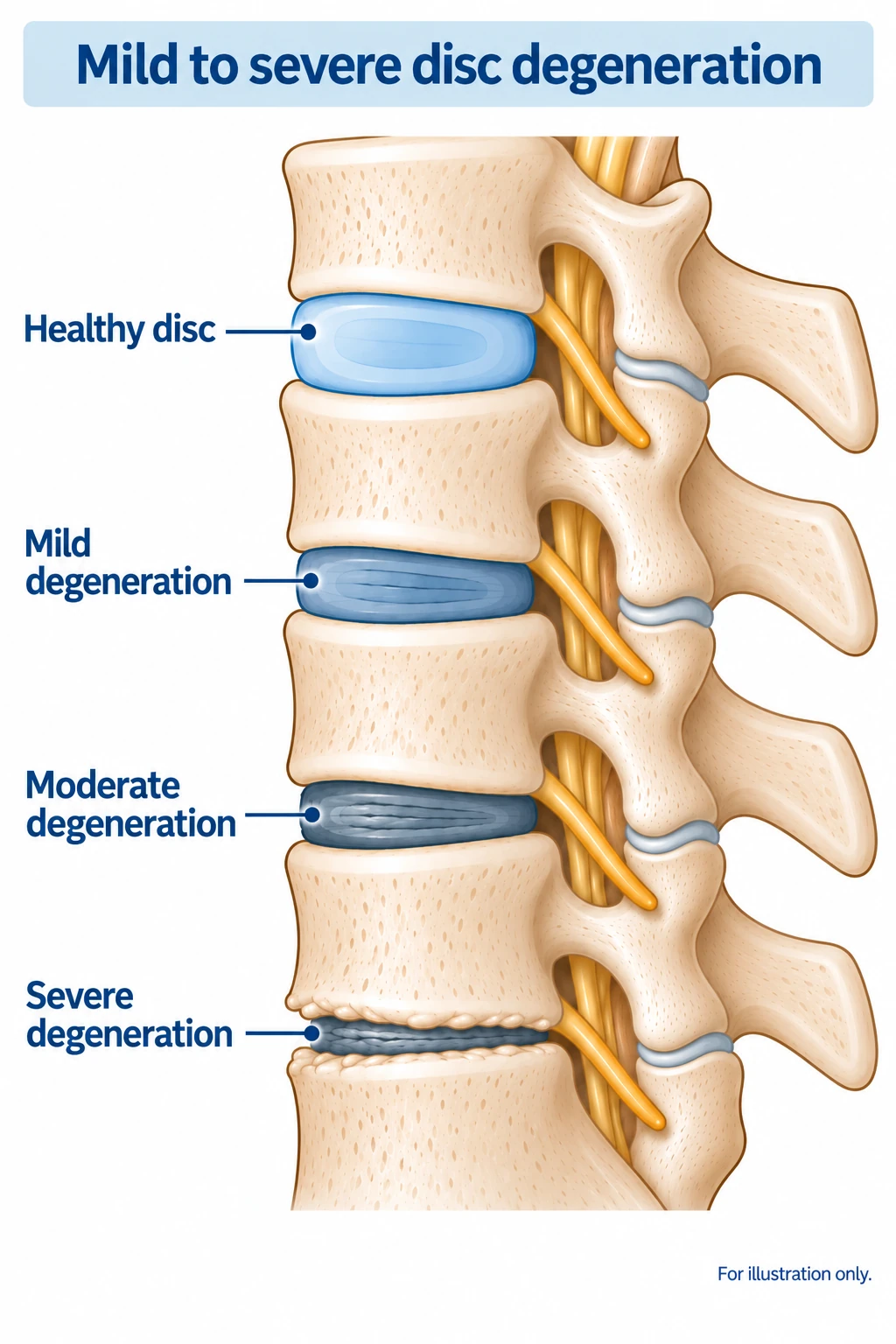
On an MRI, disc degeneration is usually described as mild, moderate, or severe, and it is often graded on the Pfirrmann scale, which runs from 1 (a healthy, well-hydrated disc) to 5 (a collapsed, badly worn one).

Mild: the disc has begun to dry out and lose a little of its height and cushioning, often with small tears in its outer wall. Many people at this stage have no symptoms at all.

Moderate: the disc has lost more height and water content, and the segment carries load less evenly. This is often the stage where back pain and stiffness are most noticeable.

Severe: the disc is markedly thinned or collapsed, and the body usually responds by stiffening the segment with bone spurs.
The grade on a scan does not reliably predict how much pain someone is in: a mildly worn disc can be very painful, and a severely worn one can be silent. In fact, pain often eases as a badly degenerated segment stiffens and becomes stable again, which is why treatment is guided by symptoms rather than by the images alone.

How is Degenerative Disc Disease treated?

Most degenerative disc disease is managed without surgery, and because the spine often stabilises over time, many patients improve with conservative care alone.

1. Conservative care (first line). Remaining active, targeted physiotherapy and core strengthening, low-impact exercise such as swimming, weight management, and anti-inflammatory or other pain medication where appropriate. Most patients begin here, and many need nothing further.

2. Injections. Epidural steroid injections can provide some patients with a period of relief, particularly when a nerve is inflamed, although the benefit is variable and often temporary. They can calm a flare or support a rehabilitation programme, but they are not a cure.

3. Regenerative treatment. Stem cell injection into a degenerated disc remains experimental, with limited long-term evidence. It is emerging rather than established.

4. Surgery. Surgery is usually considered only after 6 to 12 months of conservative treatment have failed and symptoms continue to affect quality of life. Two situations are exceptions that require urgent assessment rather than a period of waiting: a rapidly worsening nerve problem, such as a developing foot drop, and any loss of bladder or bowel control, which can indicate cauda equina syndrome and is a medical emergency.

What are the surgery options for Degenerative Disc Disease?

For degenerative disc disease, surgery usually involves one of a few approaches, and the right choice depends on what is driving the symptoms and how far the degeneration has progressed. The main options are:

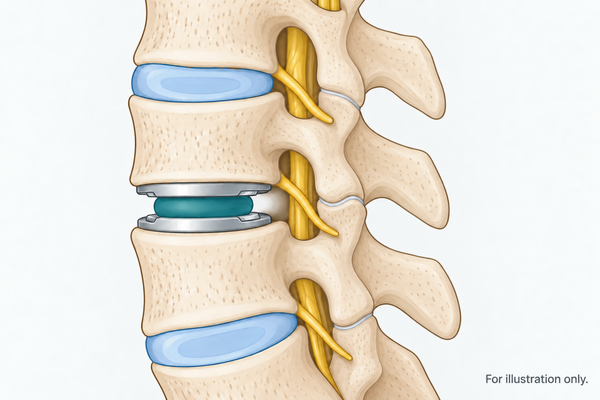
1. Artificial Disc Replacement (ADR)

Also called total disc replacement, this removes the worn disc and replaces it with an implant that preserves movement at that level. Several motion-preserving implants are used at our German centre, and they differ in design: the ProDisc-L uses a fixed ball-and-socket bearing; the activL has a mobile core that allows a small amount of controlled gliding as well as rotation; the Baguera-L can be fitted with either a mobile or a fixed core; and the LP-ESP is a one-piece viscoelastic disc that also absorbs shock. Each is supported by published clinical evidence of reduced pain and improved function, with long-term follow-up of five years and beyond for several of them. The right implant depends on your anatomy and the details of your case rather than on any one device being better, and that match is made at assessment. Long-term studies have also found comparable results whether one or two levels are treated, with replacement across three or more levels reserved for selected cases. Because movement is preserved rather than removed, studies have found that disc replacement is associated with less wear on the neighbouring segments than fusion, though it is not suitable for everyone, so careful patient selection is what makes the difference.

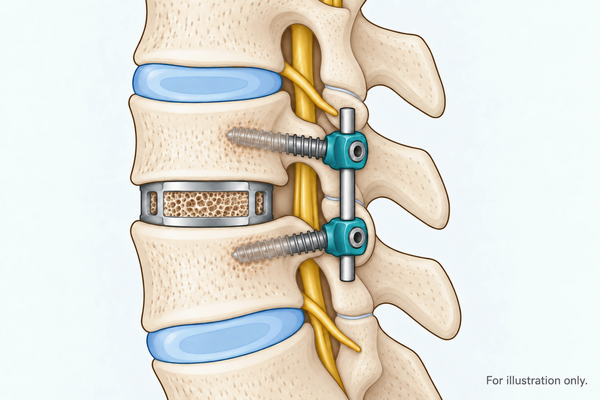
2. Spinal Fusion

Permanently joins the affected vertebrae so that the painful segment no longer moves. Because it removes motion at that level, it transfers additional load onto the segments above and below, which can wear them down over time, a process known as adjacent segment disease. This is why motion-preserving options are considered first where they are suitable. Fusion is not always something to avoid, however. In some patients the degeneration has become too advanced, or the segment too unstable, for disc replacement to be a sensible option, and a fusion is then the more reliable route to a good outcome. Where fusion is the right choice, it can often be performed using a minimally invasive technique, with smaller incisions, less disturbance to muscle and tissue, and generally a quicker recovery than traditional open fusion.

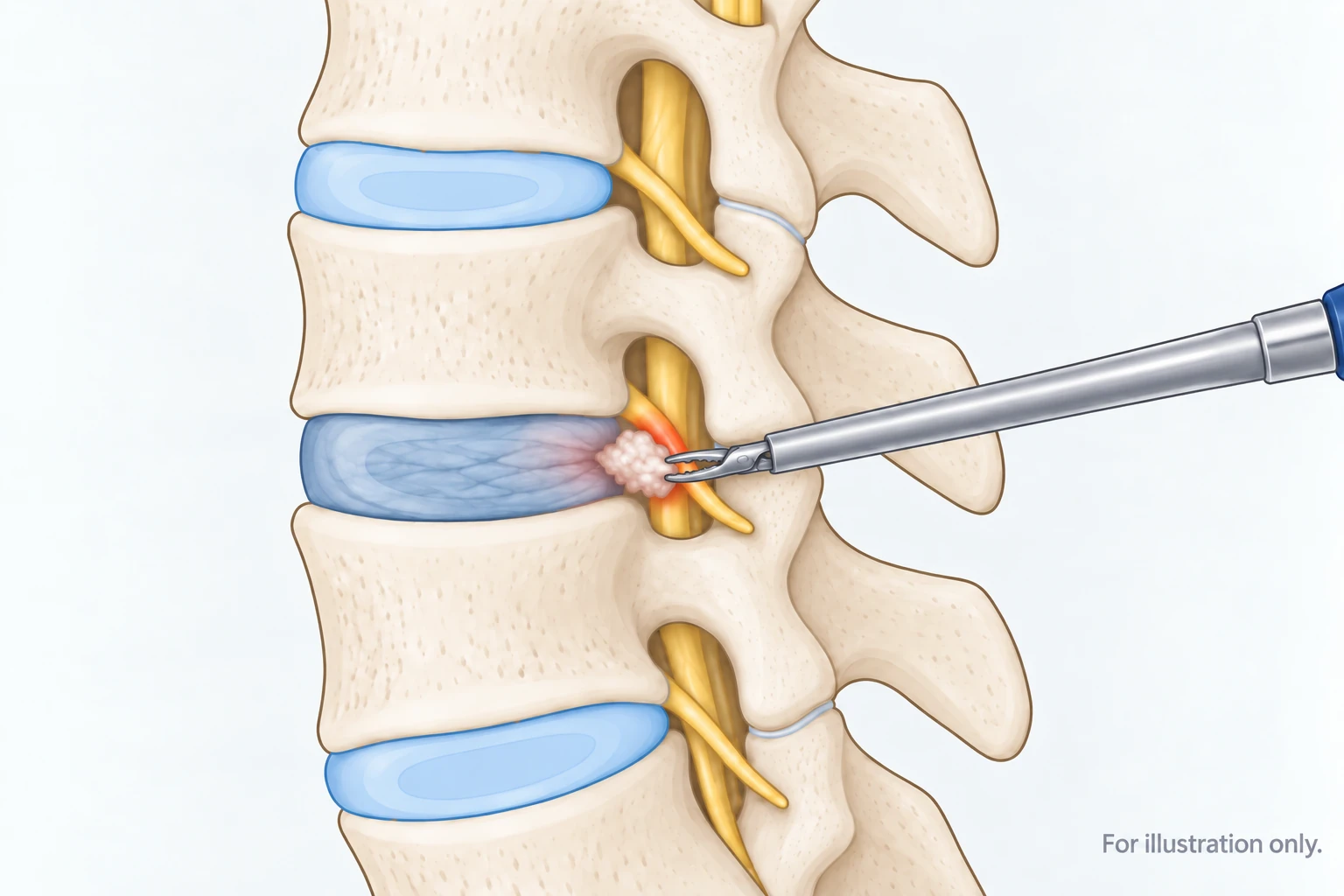
3. Microdiscectomy

This addresses a different problem. Where a worn or herniated disc presses on a nerve and causes leg or arm symptoms, removing the fragment that is compressing the nerve can relieve that radiating pain, often through a keyhole (endoscopic) approach. It treats the compression rather than the degeneration, and because it removes disc material it can accelerate wear at that level over time, so a surgeon who specialises in endoscopic discectomy should confirm whether you are a suitable candidate.

In every case, the aim is to match the procedure, and the implant, to the stage of the condition and the individual patient, rather than to fit every patient to the same operation.

For patients whose facet joints hurt because of a collapsing disc, restoring disc height with a replacement can relieve load on the facet joints behind it, so treating the disc can, in selected cases, settle facet pain as well.

What does recovery look like after Disc Replacement?

Recovery after disc replacement depends on whether the cervical or lumbar spine is treated and on how many levels are operated on. As a general guide, most patients are up and walking to the bathroom within 24 hours of surgery, begin mobility training with the hospital physiotherapists on day two, and are fully independent by the time they leave hospital, usually after five to six days. Most return to light duties around six weeks after surgery and to full duties at about twelve weeks.

Recovery after a fusion or a microdiscectomy follows a different course, which the surgical team explains for your specific procedure.

Patient Story: Choosing Disc Replacement over a Double Fusion

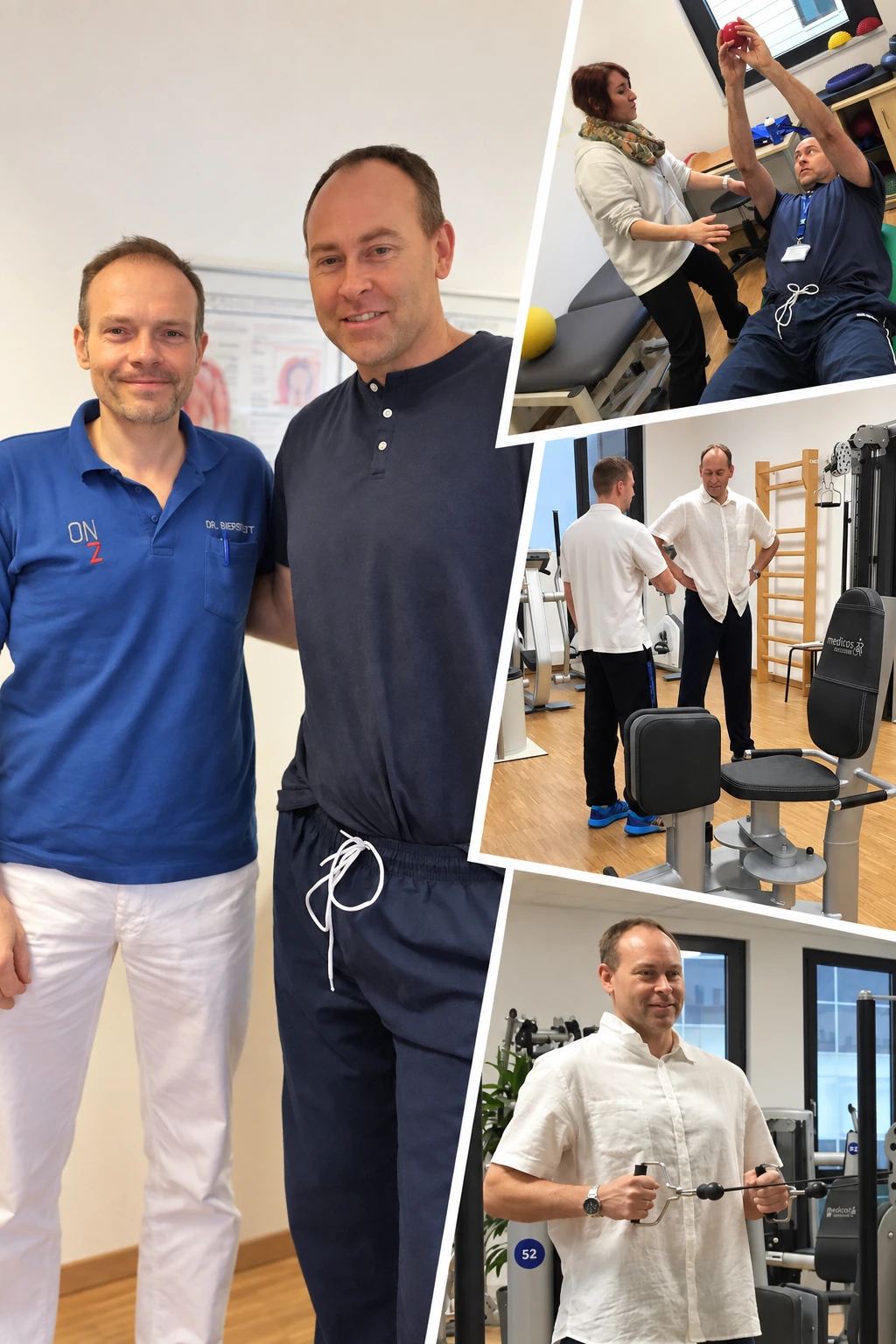
Jeff, a commercial airline pilot from New Zealand, came to us with degenerative disc disease at the two lowest levels of his lumbar spine, L4/L5 and L5/S1. The pain came on whenever he sat for any length of time, which for a pilot was bringing his career to a halt. At home he had been offered a single surgical option, a two-level fusion, with the caution that it might not remove the pain, that there was a real chance he would not return to work, and that it could accelerate wear at the level above. He worked through conservative care for years first, physiotherapy, core strengthening, chiropractic, and spinal decompression, and turned to surgery only once he was satisfied he had exhausted the alternatives.

Rather than fuse the spine, Jeff chose a motion-preserving option his own healthcare system did not offer: artificial disc replacement at both levels, carried out through an anterior approach by Dr. Bierstedt at the ONZ centre in Germany. He spent seven days in hospital, followed by rehabilitation at Medicos, where he opted to extend the usual one-week program for a second week. About nine months later he passed his aviation medical and returned to flying.

Nine years on, we caught up with Jeff over lunch. He is doing well, and he now shares his experience with other pilots, from Europe and the United States, who are facing the same decision he once did.

What we see at Spine Connection

Many of the disc disease patients who reach us have been offered a fusion as their only option and want to know whether something that preserves movement would fit. Our focus is to look at what is actually driving the pain and how far the degeneration has gone, and to consider a motion-preserving option where it is suitable before a fusion is chosen.

Frequently Asked Questions (FAQ)

DDD stands for degenerative disc disease. Despite the name it is not really a disease, and it is not something you catch. It describes the normal age-related wear of the cushioning discs between the vertebrae. Most people over 40 have some degree of it on a scan, and the large majority have no symptoms from it at all.

Radiologists commonly describe disc degeneration in grades, from a disc that is still well hydrated with normal height, through progressive drying and loss of height, to a severely collapsed disc with little space left. Different centres use different scales. The important caveat is the same one that applies across spine imaging: the grade describes the picture, not the pain, and treatment follows symptoms rather than the scan.

It is a general phrase radiologists use for age-related wear. This includes discs that have lost height or water content, facet joints showing arthritis, small bone spurs. It is descriptive, not a diagnosis, and it is an extremely common finding on the scans of people with no back pain. On its own it does not explain symptoms, which is why the report has to be read alongside how you actually feel.

Over time, spinal discs lose water content (hydration) and height with the normal aging process. Genetics play a significant part, and family tendency is one of the strongest predictors. Smoking, heavy repetitive loading, and previous injury can all accelerate it. It is much less about “wear from use” than most people assume.

The wear itself cannot be reversed, but that is not the same as saying nothing can be done. Pain from disc degeneration often settles over time, and the large majority of people are managed successfully without surgery. Where a specific worn disc is confirmed as the source of persistent pain, replacing it can restore the lost height and preserve movement at that level.

Yes. Where a disc degenerates completely and loses all its height, the vertebrae above and below can eventually bridge with bone and stiffen on their own. This is called auto fusion. It can take many years, and for some people the pain settles as the segment becomes stiff, because the abnormal movement that was causing pain has stopped.

Genetics is one of the strongest influences on it. Studies of families and twins consistently find that inherited factors account for a substantial share of who develops significant disc degeneration and how early. That does not make it inevitable, and the things you can influence, such as staying active, not smoking, managing load, still matter.

Been told you need a Spinal Fusion?

If you have been offered a fusion for degenerative disc disease, or you are stuck on a waiting list, or facing a cost you cannot meet at home, it is worth seeking a second opinion before committing to a procedure that permanently removes movement. Our specialists in Germany and Thailand can review your imaging and tell you honestly whether disc replacement or another option fits your case, or whether a fusion is the better choice for you.

Sources

  1. Imaging Features of the Aging Spine. 2021. (Disc degeneration, bulging, and facet arthropathy documented in almost 90% of asymptomatic people over 60; ageing changes are natural and progressive.) (https://pmc.ncbi.nlm.nih.gov/articles/PMC8297484/)
  2. Lumbar Degenerative Disk Disease. StatPearls (updated 2023). (Disc degeneration is directly correlated with increasing age; a common age-related process rather than a distinct disease.) (https://www.ncbi.nlm.nih.gov/books/NBK448134/)
  3. Marnay T, et al. Clinical Outcomes After 1- and 2-Level Lumbar Total Disc Arthroplasty: 1,187 Patients with 7 to 21-Year Follow-up (ProDisc-L). J Bone Joint Surg Am, 2024. (Durable long-term success; one- and two-level results equivalent.) (https://dx.doi.org/10.2106/JBJS.23.00735)
  4. Zigler J, et al. Comparison of therapies in lumbar degenerative disc disease: a network meta-analysis of randomized controlled trials. J Comp Eff Res, 2018. (activL had the most favourable ODI success, back pain, and satisfaction results.) (https://becarispublishing.com/doi/10.2217/cer-2017-0047)
  5. Long-term Outcomes of Total Lumbar Disc Prosthesis: Sustained Pain Relief (Baguera-L, Spineart). North American Spine Society Journal, 2025. (130 patients, follow-up to about 7.5 years; substantial improvement, no implant revisions, low complication rate.) (https://pmc.ncbi.nlm.nih.gov/articles/PMC12634311/)
  6. Lazennec JY, et al. Five-year follow-up of clinical and radiological outcomes of LP-ESP elastomeric lumbar total disc replacement in active patients. Spine J, 2018. (Significant clinical improvement, low revision rate, no adjacent-level disease.) (https://pubmed.ncbi.nlm.nih.gov/29800708/)
  7. Zigler JE, et al. Progression of Adjacent-level Degeneration After Lumbar Total Disc Replacement (activL or ProDisc-L). Spine, 2018. (Fusion is associated with high rates of adjacent-level degeneration; disc replacement may reduce this risk.) (https://journals.lww.com/spinejournal/abstract/2018/10150/progression_of_adjacent_level_degeneration_after.11.aspx)
We're here
to help.
Leave your details and we will contact you to answer your questions.

Get a Spine Specialist's Opinion for Your Degenerative Disc Disease (DDD)

Leave your details and we will contact you to answer your questions. We're here to help.


Join Our Youtube Channel

Watch videos showcasing the latest technologies and surgery techniques, and keep up to date with patient stories from around the globe.