Contact Us Today
 Begin My Assessment
 Watch Us On Youtube
 enquiries@spineconnection.org



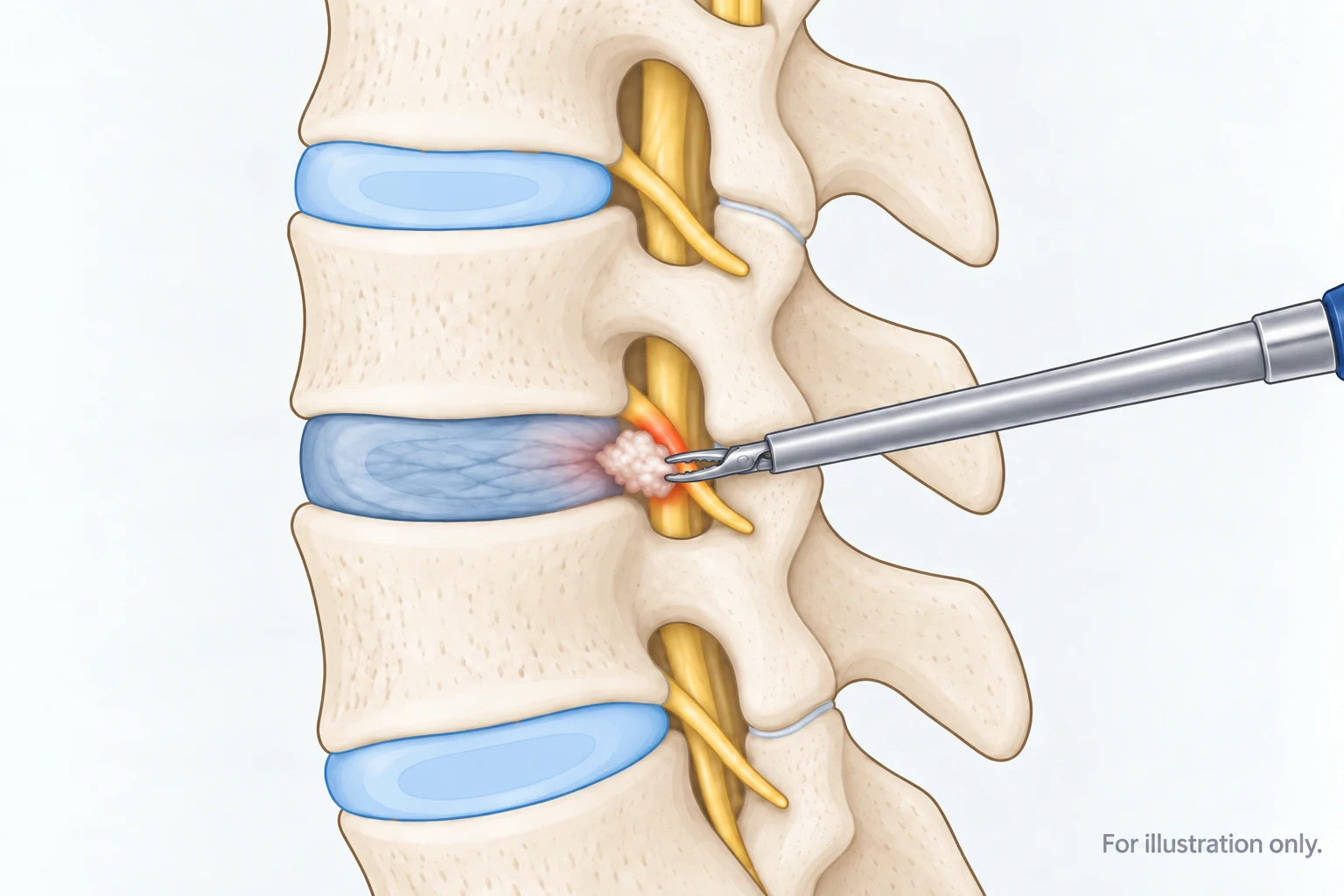
Where a stable, low-grade slip is pinching nerves, removing the bone and thickened ligament that are crowding them relieves the leg symptoms, and for these cases it can be enough on its own. Recent studies of degenerative spondylolisthesis have found that adding a fusion to the decompression often does not improve outcomes, so decompression alone is frequently reasonable and a fusion should not be automatic.
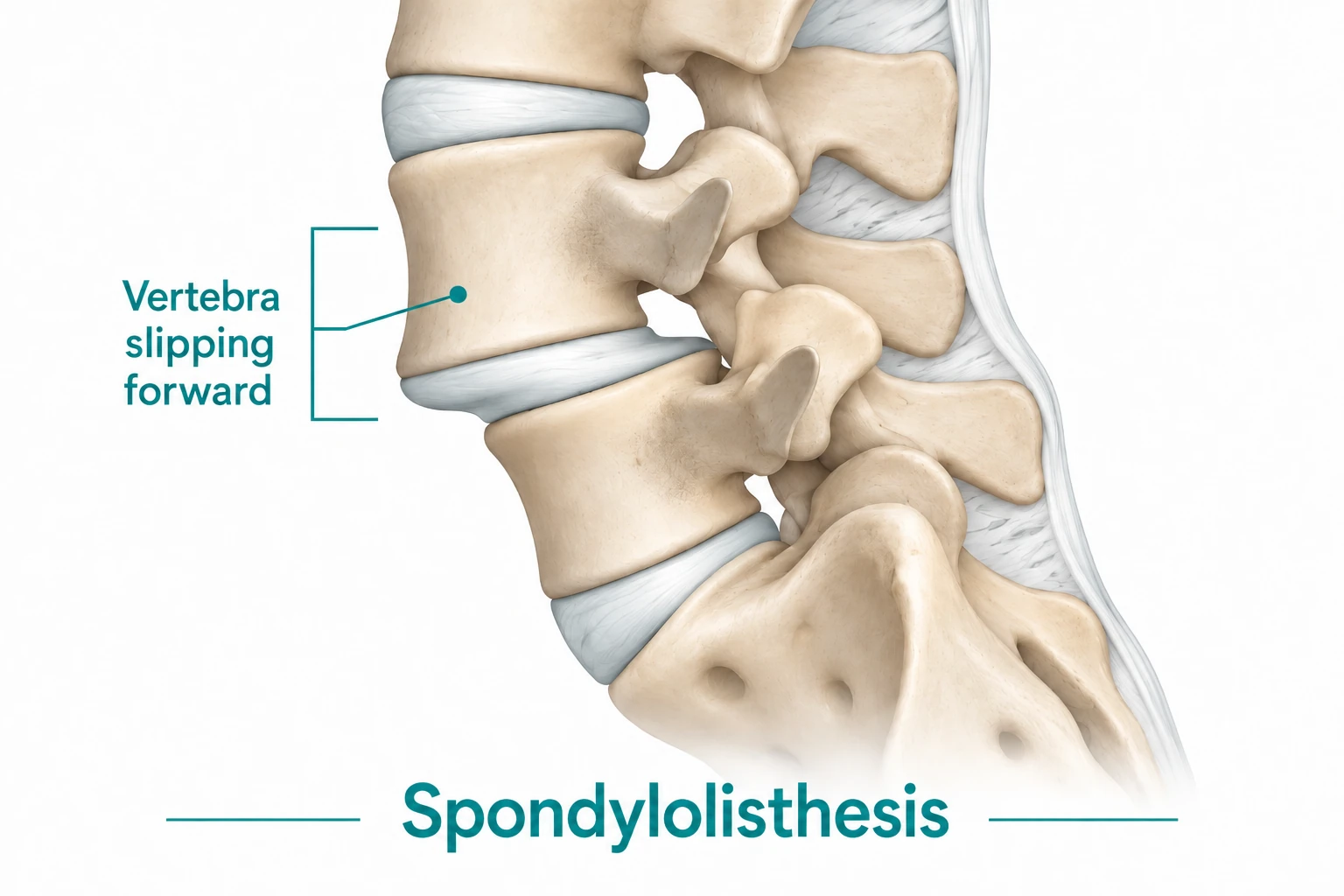
Spondylolisthesis is when one vertebra slips forward over the one below it. It happens most often in the lower back. When a vertebra slips backwards instead, the same problem is called retrolisthesis. On a scan report you may simply see listhesis, meaning a vertebra out of line with the one below, or anterolisthesis for a forward slip. The slip itself is only part of the picture: what matters is what caused it, how far it has moved, whether it is stable, and whether it is pressing on any nerves.
Many people have a slip and no symptoms at all, and the size of the slip does not reliably predict how much pain it causes. A small slip can be painful and a larger one can be silent, which is why the scan is always read alongside how a person actually feels.