 Contact Us Today
 Begin My Assessment
 Watch Us On Youtube
 enquiries@spineconnection.org


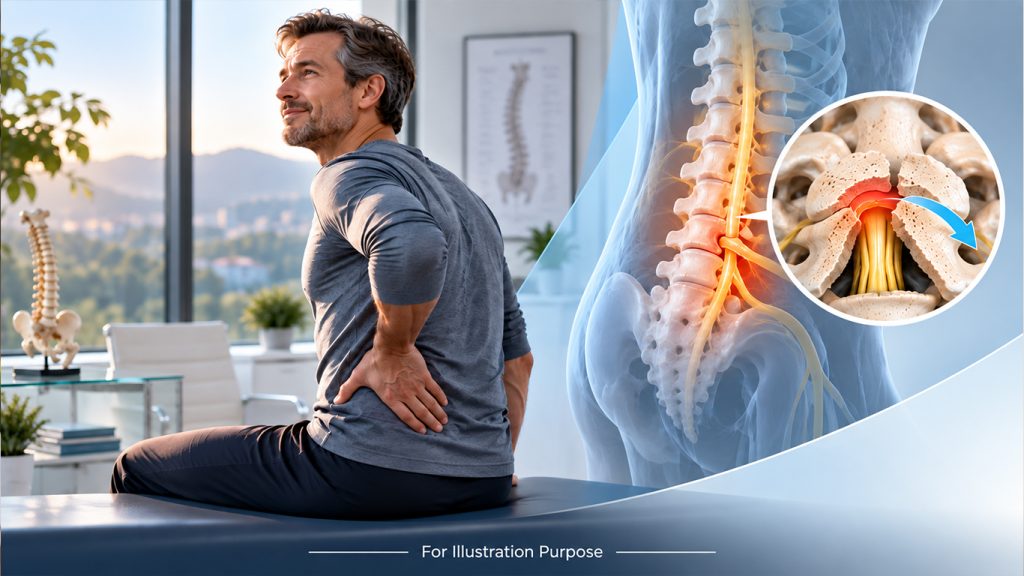
Pain, numbness, or weakness in your legs can make simple activities harder. Standing for a few minutes, walking through a shop, or climbing stairs might become difficult. Lumbar stenosis is one possible cause. This condition narrows the space around the spinal cord or nerve roots. Changes in discs, facet joints, ligaments, or bone can contribute to this narrowing. When pressure affects a nerve, symptoms often become worse with standing or walking and improve when you sit or lean forward. Laminectomy and decompression aim to create more space around affected nerves.
The right treatment depends on your symptoms, scans, spinal structure, and overall health.
What Causes Nerve Compression in the Spine?
Nerve compression often develops as the spine changes over time. Discs lose height, facet joints become enlarged, ligaments become thicker, and bone spurs can form. These changes reduce the space available for nerves.
A herniated disc also might press against a nerve. In some people, a naturally narrow spinal canal contributes to symptoms.
Central, Lateral, and Foraminal Stenosis
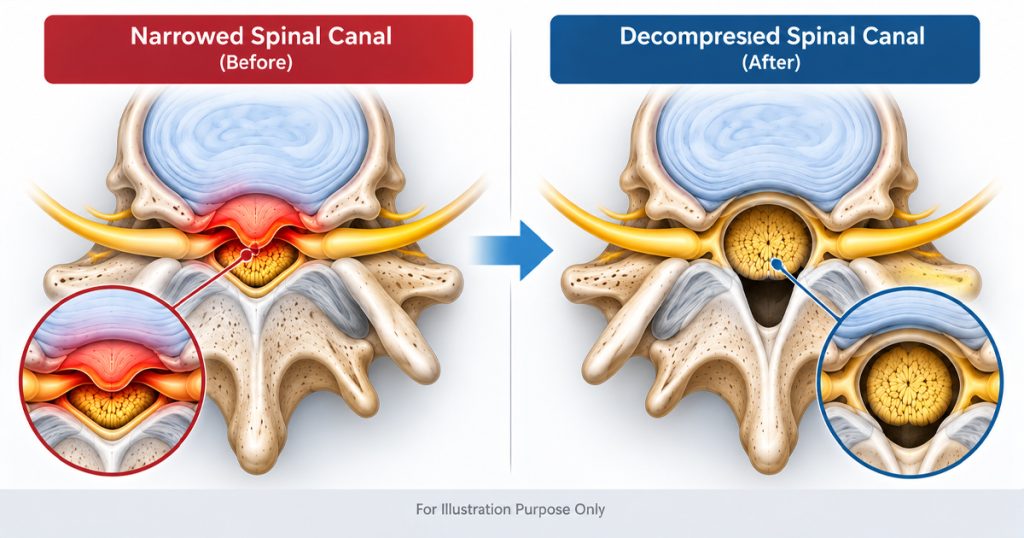
Central stenosis affects the main spinal canal. In the lower back, narrowing might affect the nerves within the canal. In the neck, severe narrowing might affect the spinal cord.
Lateral recess stenosis affects the side of the spinal canal near a passing or exiting nerve root.
Foraminal stenosis affects the opening where a nerve root leaves the spine. A herniated disc, bone spur, or other structural change might reduce this space.
Congenital and Less Common Causes
Some people are born with a smaller spinal canal. This is known as congenital stenosis. Less common causes include tumours, infection, spinal curvature, and some conditions affecting bone or tissue.
The cause matters because treatment needs to address the source of the pressure.
How To Recognise the Symptoms
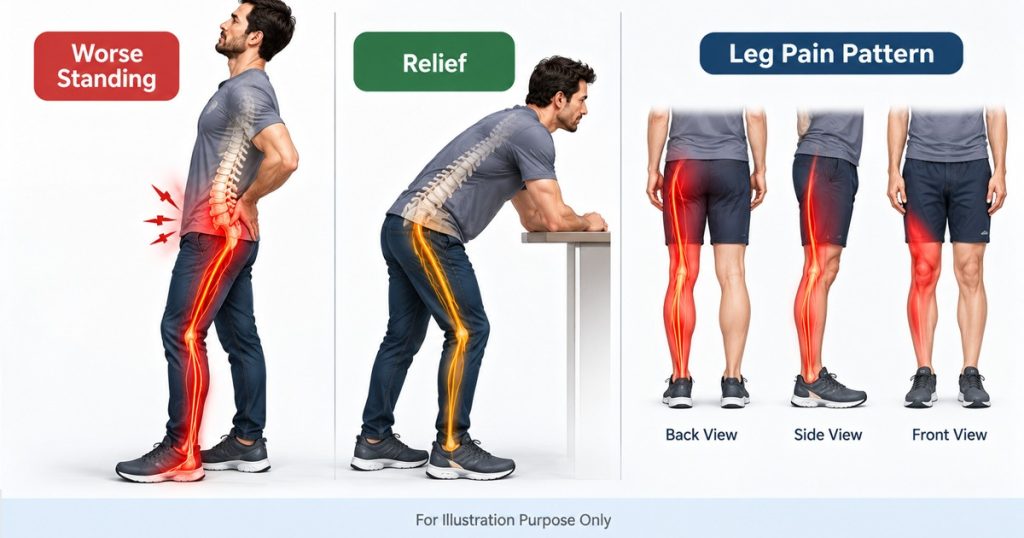
Lumbar spinal stenosis often affects the lower back, buttocks, and legs. Common symptoms include:
- Pain that travels into the buttock or leg
- Numbness or tingling in the legs or feet
- Weakness in the legs
- Cramping after standing or walking
- Reduced walking distance
- Symptoms that improve when sitting or bending forward
Many people notice a clear pattern. Standing or walking, especially downhill, brings on symptoms. Sitting or leaning forward often gives relief. Some people find cycling easier because the forward position reduces pressure within the spinal canal.
Neck stenosis follows a different pattern. Symptoms might include arm or hand numbness, weakness, balance problems, or changes in hand coordination.
Seek medical assessment when symptoms persist, worsen, or interfere with daily activities.
How Is Lumbar Stenosis Diagnosed?
Your doctor starts with your symptoms and medical history. A physical and neurological examination checks strength, sensation, reflexes, balance, and movement.
MRI gives a detailed view of discs, nerves, ligaments, and other soft tissue. CT gives a clearer view of bone changes, such as bone spurs. X-rays help assess alignment and other structural changes.
A narrow spinal canal does not always cause symptoms. For this reason, doctors compare your scan findings with your symptoms and examination before recommending treatment.
Why Do Doctors Start With Conservative Treatment?
Many patients start with non-surgical care when their symptoms and nerve function allow time for this approach.
Treatment might include:
- Anti-inflammatory or other pain medicines
- Physical therapy
- Guided exercise
- Changes to daily activities
- Weight management when appropriate
- Selected epidural injections
Physical therapy often focuses on strength, flexibility, balance, and safe movement. Injections might provide temporary symptom relief for some patients.
Your treatment plan should reflect your diagnosis, symptoms, general health, and daily needs. When symptoms remain severe, walking becomes difficult, or neurological problems progress, a specialist might discuss spinal stenosis surgery.
Surgical Laminectomy and Decompression Options
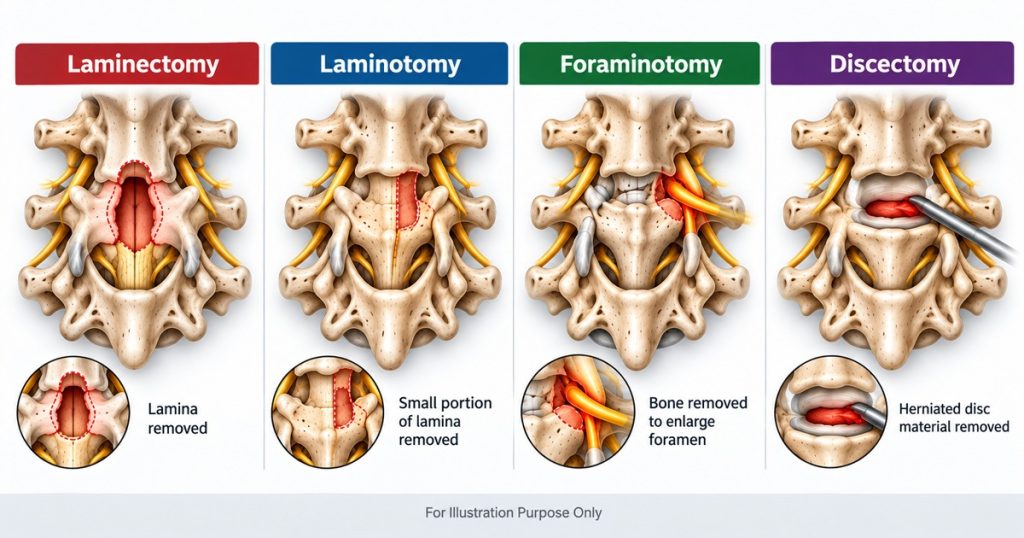
A lumbar decompression surgery creates more space around a compressed nerve. This can be performed with a traditional “open surgery” technique, or newer keyhole and endoscopic techniques can be used for less trauma and a faster recovery time.
A laminectomy is one form of decompression.
During a laminectomy, the surgeon removes part or all of the lamina, the bony structure at the back of a vertebra. The surgeon might also remove thickened ligament or other tissue contributing to nerve compression.
Other procedures address specific sources of pressure.
- A laminotomy removes part of the lamina to create a smaller opening.
- A foraminotomy widens the opening around an exiting nerve root.
- A discectomy removes part of a herniated disc when the disc presses against a nerve.
A spinal decompression surgery focuses on nerve pressure in the lower back. The exact procedure depends on the location and cause of the narrowing.
An average minimally invasive spine surgery uses smaller access points and specialised instruments in selected cases. Your surgeon decides whether this approach fits your anatomy and treatment needs.
Does Decompression Require Spinal Fusion?
No. Some patients receive decompression without fusion. Others have spinal instability, vertebral slippage, deformity, or another structural problem where fusion forms part of the treatment plan.
Decompression with spinal fusion is therefore a case-by-case decision. Your surgeon considers your symptoms, scans, spinal stability, and the underlying cause of nerve compression.
Motion-Preserving Alternatives to Fusion
Decompression is not the only topic to discuss when reviewing spine treatment. Some patients with specific disc or facet problems have motion-preserving treatment options.
Artificial Disc Replacement uses an implant designed to preserve movement at the treated level. Total Facet Joint Replacement replaces damaged facet joints with an implant designed to support movement.
These procedures do not suit every patient. Suitability depends on factors such as the affected level, spinal stability, anatomy, diagnosis, and overall health.
Spine Connection helps patients compare specialist opinions and treatment options through its international network in Germany and Thailand. The team includes Neurosurgeons and Orthopedic Spine Specialists with experience in decompression, minimally invasive procedures, motion-preserving surgery, and other spine treatments.
A Complete Recovery Time After Surgery
When it comes to Laminectomy recovery time, it varies from person to person. The number of levels treated, surgical approach, general health, physical condition, and any additional procedure all affect recovery.
First Hours After Surgery
Many patients begin standing and walking soon after surgery. Your care team decides when movement is safe based on your procedure and condition.
Same Day or Next Day
Some patients go home on the day of surgery. Others stay overnight or longer. The length of stay depends on the operation and your individual needs.
First Few Weeks
Your care team provides guidance on walking, wound care, lifting, driving, work, and daily activities. Physical therapy might form part of your recovery plan.
Leg pain linked to nerve pressure often improves before numbness or weakness. Recovery differs between patients, so your surgeon should give you a personal recovery plan.
Following Weeks and Months
Some people return to work within a few weeks. Others need more time, especially after a larger procedure or when their work involves physical activity.
The goal of rehabilitation is to help you return to safe movement and normal daily activities at a suitable pace.
Review Your Spine Treatment Options With Greater Clarity
A laminectomy and decompression might be suitable for one patient and unsuitable for another. Your scan is one part of the decision. Your symptoms, neurological findings, spinal stability, general health, and daily limitations also matter.
If you are considering a spine stenosis procedure or have already received a recommendation for surgery, an additional specialist opinion might help you understand your options.
At Spine Connection, we bring together international Neurosurgeons and Orthopedic Spine Specialists in Germany and Thailand. Our team helps patients organise their medical information and imaging for specialist review, compare opinions, and understand possible treatment pathways.
The assessment process starts with your case. You provide your medical information and relevant spine images. Spine Connection then coordinates specialist evaluation according to your selected treatment destination.
If you want a clearer view of your options before deciding on surgery, start with your case rather than a general treatment plan.
Begin My Assessment or Contact Spine Connection to discuss your next step now.
Frequently Asked Questions
What is the difference between central and lateral spinal stenosis?
Central stenosis narrows the main spinal canal. Lateral stenosis affects the side of the canal near nerve roots. Both forms might cause pain, numbness, tingling, or weakness, depending on the nerves involved.
Does spinal decompression always require fusion?
No. Some patients receive decompression alone. Fusion forms part of treatment when factors such as spinal instability or vertebral slippage also need correction. The decision depends on your individual case.
What are the first-line, non-surgical treatments for nerve compression?
Common options include pain medicines, physical therapy, guided exercise, activity changes, weight management when appropriate, and selected injections. Your doctor chooses treatment based on your symptoms and diagnosis.
What is laminectomy recovery time like?
Recovery varies by procedure and patient. Many people start walking soon after surgery. Some return to work within several weeks, while others need longer. Your surgeon should provide a recovery plan based on your operation.

