 Contact Us Today
 Begin My Assessment
 Watch Us On Youtube
 enquiries@spineconnection.org


Pain in your lower back, buttock, hip, or pelvis does not always come from your spine. Sometimes the source can be your sacroiliac joint, also called the SI joint.
The SI joint connects the bottom of your spine, called the sacrum, to the pelvis. This joint helps transfer weight between your upper body and legs. When the joint becomes too loose, too stiff, worn, or inflamed, you might feel deep pain in your buttock or lower back.
For some people, simple treatments provide enough relief. For others, pain continues despite months of care. In these cases, Sacroiliac Joint Fusion might be considered to make the joint stable and reduce painful movement.
So, what causes SI joint pain? How do doctors find the source? And when does fusion become an option? Here is what you need to know.
What Is SI Joint Dysfunction?
Sacroiliac joint dysfunction means the SI joint is not working as it should. The problem might involve too much movement, too little movement, wear and tear, injury, or inflammation.
Inflammation of the SI joint is called sacroiliitis. Arthritis, injury, pregnancy, or other conditions might contribute to inflammation.pain persisting after a previous spinal operation
Because the SI joint sits close to your lower back and hips, pain from this area often feels like a back or hip problem. This makes a careful diagnosis important before you choose a SI joint pain treatment.
What Does SI Joint Pain Feel Like?
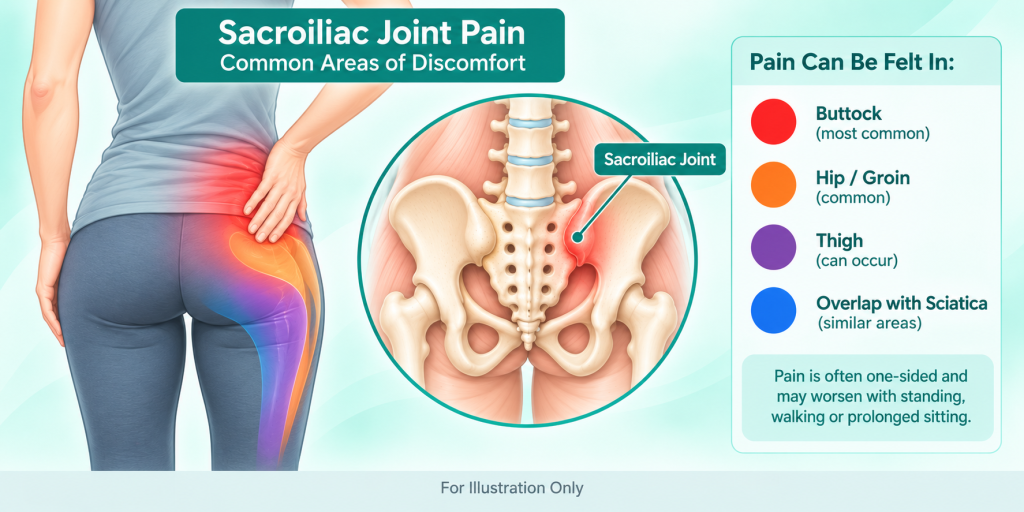
SI joint pain often starts deep in one side of the buttock. Some people also feel pain in the lower back, hip, groin, thigh, or leg.
You might notice more pain when you:
- Sit for a long time.
- Stand for a long time.
- Walk or climb stairs.
- Turn or twist your body.
- Get up from a chair.
- Roll over in bed.
- Change position after sitting.
You might also notice stiffness in your lower back or hip after waking.
These symptoms do not always mean your SI joint is the cause. Disc problems, nerve pain, hip conditions, and muscle problems might cause similar symptoms. Your doctor needs to check these other causes before recommending SI joint treatment.
What Causes SI Joint Pain?
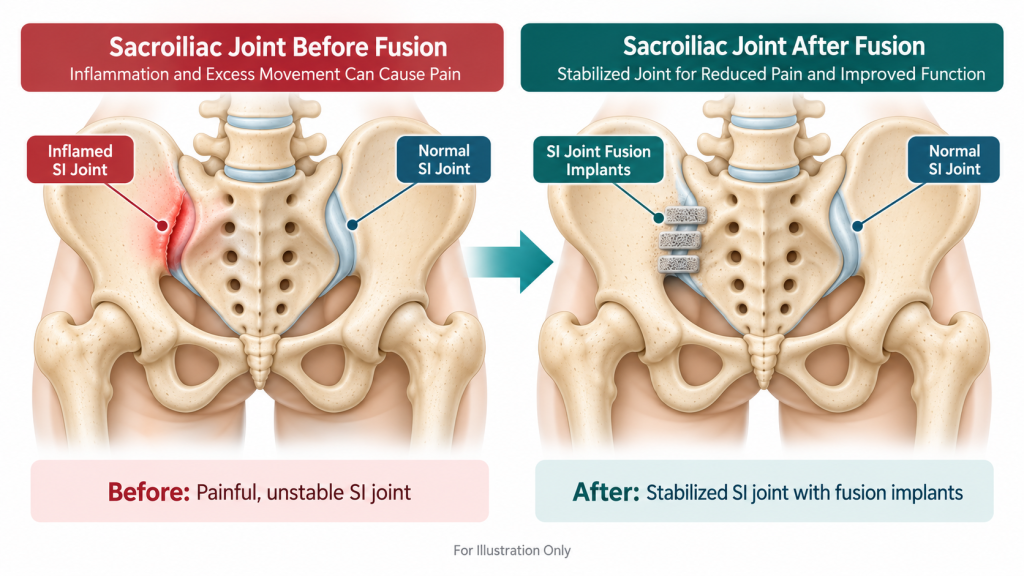
Hypermobility
Hypermobility means the SI joint moves more than it should. This extra movement might cause pain and a feeling of instability.
Pregnancy is one possible reason for increased SI joint movement. Pregnancy hormones loosen the body’s ligaments, while the growing baby adds weight to the pelvis. These changes place extra stress on the SI joint.
Hypomobility and Fixation
Hypomobility means the joint moves less than normal. The joint might feel stiff or restricted.
An injury, arthritis, or a past pelvic fracture might contribute to this problem. Pain often stays on one side of the buttock, although symptoms vary from person to person.
The key point is simple. Both too much movement and too little movement might cause SI joint pain.
How Do Doctors Find the Pain Source?
Finding the cause of buttock and pelvic pain takes more than looking at a scan.
Your doctor will ask about your symptoms, previous injuries, past surgeries, daily activities, and treatments you have already tried. A physical exam then checks your lower back, hips, pelvis, and movement.
Your doctor also looks for other possible causes, such as a disc problem, nerve irritation, hip condition, or muscle problem. This step becomes especially important if you have pain persisting after a previous spinal operation.
Piriformis Syndrome Can Feel Similar
Piriformis syndrome is another condition that might cause buttock pain. The piriformis is a small muscle deep in the buttock, close to the sciatic nerve.
When this muscle becomes irritated or tight, the pain might feel similar to SI joint pain. Your doctor checks for conditions like this before deciding on treatment.
Joint Diagnostic Block
An SI joint diagnostic block is one tool doctors use when they suspect the SI joint is causing your pain.
During the procedure, your doctor guides a small needle into the SI joint with imaging. A local numbing medicine, such as lidocaine, is then injected.
If your usual pain improves for a short time after the injection, the result supports the SI joint as a source of your pain. Your doctor considers this result along with your symptoms, physical exam, and other tests.
What Treatments Come Before Fusion?
Doctors usually start with non-surgical care. Your treatment plan depends on your symptoms and the cause of your pain.
Step 1: Ice and Heat
Cold packs might help reduce pain and swelling during a painful flare. Many people use an ice pack for about 15 to 20 minutes at a time.
Heat might help with stiffness and muscle tightness. Ask your doctor which option fits your symptoms.
Step 2: Pain Medicine
Some people use medicines such as NSAIDs to help control pain and inflammation. Acetaminophen is another option for some patients.
Your doctor should guide your medicine choice, especially if you have other health problems or take other medicines.
Step 3: Chiropractic Treatment
Some patients with a stiff or restricted SI joint receive hands-on treatment to improve movement.
Treatment needs to match the cause of the problem. A technique suitable for a stiff joint might not suit an unstable joint.
Step 4: Supportive Belts
An SI joint belt or pelvic belt provides support around the pelvis. Your doctor or physical therapist might suggest a belt when extra joint support is needed.
Step 5: Physical Therapy
Physical therapy focuses on strength, movement, balance, and control.
Your therapist might recommend core exercises, low-impact activity, walking, or water-based exercise. The goal is to help you move with less pain and improve support around the pelvis.
Step 6: Injections and Radiofrequency Treatment
An SI joint injection might contain a numbing medicine and a steroid. Doctors use these injections to help reduce pain and inflammation. The response also provides information during the diagnostic process.
For some people with ongoing pain, radiofrequency ablation is another treatment option. This treatment uses heat to reduce pain signals from small nerves around the joint.
Many patients try several non-surgical treatments before discussing surgery.
When Is Sacroiliac Joint Fusion Considered?
A sacroiliac joint pain treatment is usually considered when your doctor has strong evidence that the SI joint causes your pain, your symptoms seriously affect daily life, and non-surgical treatments have not provided enough relief.
Your doctor also looks for signs of joint instability or degeneration.
Fusion permanently joins the bones around the SI joint. Because of this, you should understand the benefits, risks, alternatives, and recovery before making a decision.
A second opinion from an experienced spine specialist also gives you another view of your diagnosis and treatment choices.
How Does Minimally Invasive Joint Surgery Work?
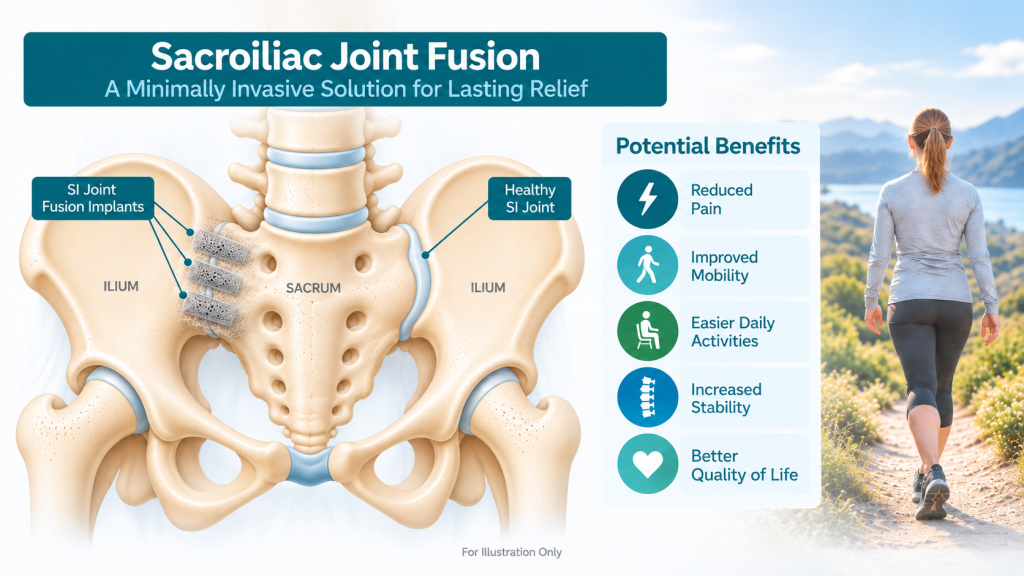
Modern minimally invasive SI joint surgery uses small incisions and X-ray guidance.
During surgery, your surgeon places an implant, screw, rod, or similar device across the SI joint. The device holds the bones in place while they heal together.
Some techniques use one or two small openings near the buttock. The exact approach depends on your anatomy, diagnosis, and surgeon’s plan.
The procedure often takes about one to two hours.
What Is Joint Fusion Recovery Like?
When it comes to SI joint fusion recovery, it happens in stages.
During the early weeks, you might need a walker or cane. Your doctor will also set limits on lifting, sitting, driving, and other activities.
Many patients need to avoid lifting more than 10 pounds during early recovery. Sitting for long periods might also be limited. Your doctor will tell you when you are ready to drive again.
Physical therapy plays an important role as you recover. It helps rebuild strength and improve movement.
Many people return to regular physical activities within three to four months, but recovery times differ from person to person.
Follow your surgeon’s instructions throughout recovery. Contact your care team if you develop signs of infection, unusual bleeding, wound drainage, or new or worsening pain.
What Are the Benefits and Risks?
The main goal of Sacroiliac Joint Fusion is to stabilize the SI joint and reduce pain caused by painful joint movement.
Many patients report less pain and better daily function after successful fusion. Results differ, so your doctor should explain what you might expect based on your condition.
Fusion is also permanent. Possible risks include infection, bleeding, reaction to anesthesia, nerve injury, continued pain, and problems with bone healing.
Your surgeon should discuss these risks with you before surgery.
Choosing Your Next Step
Persistent buttock or pelvic pain deserves a careful diagnosis. You do not need to decide on Sacroiliac Joint Fusion after one scan or one appointment.
Start by identifying the likely source of your pain. Review the treatments you have already tried. If your symptoms continue, ask whether a joint diagnostic block or another test is appropriate.
At Spine Connection, patients receive access to specialist opinions from leading hospitals in Germany and Thailand, along with minimally invasive spine surgery options and international care support. The focus stays on understanding your condition and helping you review suitable treatment paths.
Begin My Assessment today, or reach out through Ask Our Doctors, and finally trace your pain back to its true source.
FAQs
Why does SI joint pain feel like back or sciatica pain?
The SI joint sits close to the lower spine, hips, and nerves. Pain from the joint might spread into the buttock, hip, thigh, or leg. Disc and nerve problems also cause similar symptoms, so doctors need to check other possible causes.
How do doctors confirm SI joint pain?
Doctors use your symptoms, medical history, physical exam, and tests to find the likely source. An SI joint diagnostic block provides additional information. Temporary pain relief after the injection supports the SI joint as a source of pain.
Is Sacroiliac Joint Fusion minimally invasive?
Modern SI joint fusion techniques use small incisions and imaging guidance. The surgeon places an implant across the joint to keep the bones stable while they heal together.
How long does SI joint fusion recovery take?
Recovery varies from patient to patient. Early recovery includes activity limits and gradual walking. Physical therapy helps restore strength and movement. Many patients return to regular activities within three to four months.

