 Contact Us Today
 Begin My Assessment
 Watch Us On Youtube
 enquiries@spineconnection.org


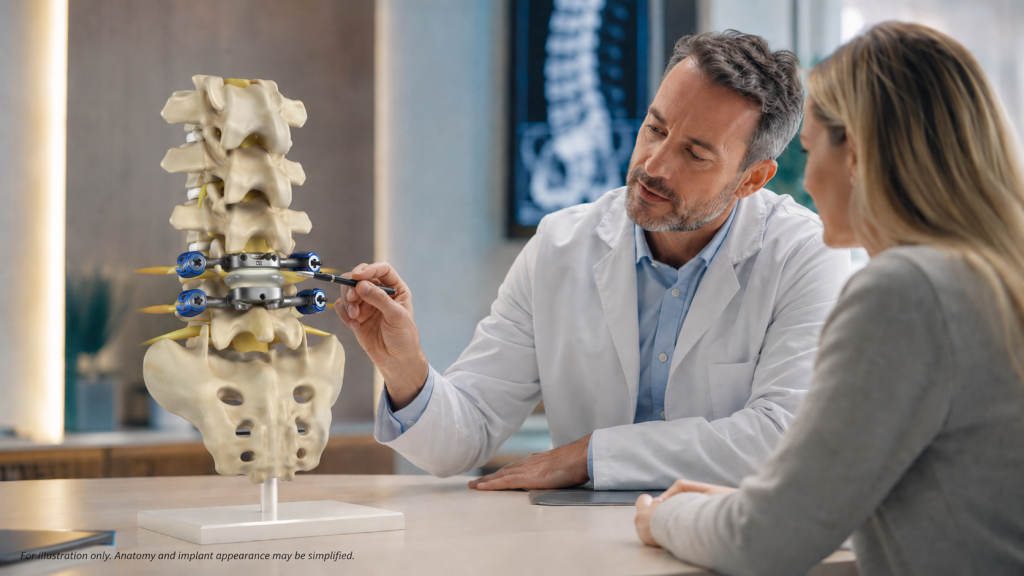
If you are suffering from spinal arthritis or injury to the small facet joints in your lower back, you may be a candidate for facet joint replacement in Germany. Over time, prolonged spinal damage can cause chronic back pain, stiffness, and nerve compression that doesn’t improve with physical therapy or injections.
Germany is often noted for advancements in technology and engineering, and total facet joint replacement offers an advanced motion-preserving option for patients living with back pain.
Today we will explain how replacing damaged back joints relieves nerve pressure, treats joint wear, and protects your mobility as a spinal fusion alternative.
What Is Total Facet Joint Replacement?
Total lumbar facet arthroplasty is an advanced surgery that preserves your spine motion. Instead of fusing the bones together, the surgeons use this arthroplasty technique for severe arthritis of the facet joints and spinal stenosis, a narrowing of the spinal canal.
Patients researching how to avoid spinal fusion often find facet joint arthroplasty as a newer technique to consider.
The concept of the surgery is simple: remove the damaged bone and arthritic facet joints, and replace them with an advanced implant that offers similar movement, while relieving pressure on the nerves.
Understanding these Medical Conditions in Simple Words
Total facet replacement can treat two often connected medical conditions. Knowing the difference helps you understand your own diagnosis and how Facet Joint Replacement works.
Facet Arthropathy
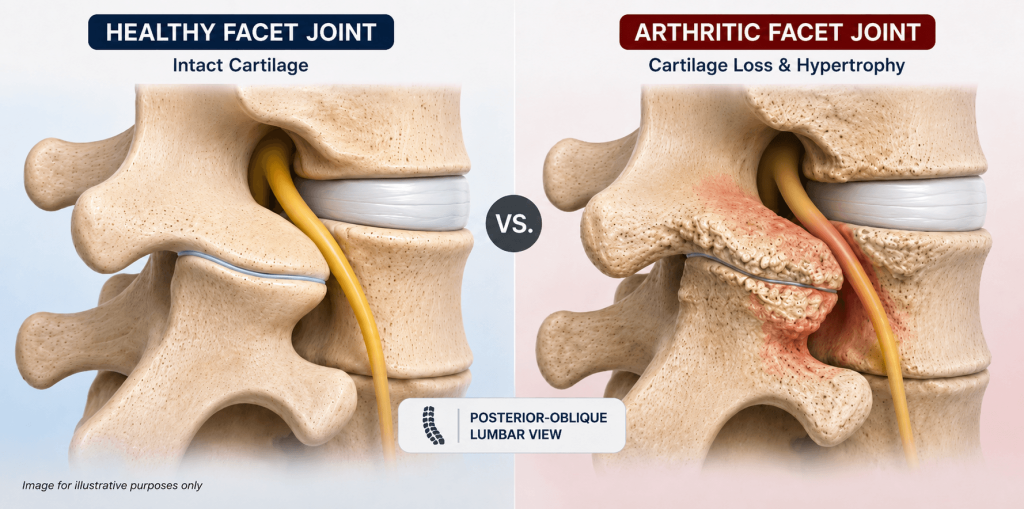
Doctors refer to facet arthropathy as wear-and-tear arthritis in the small facet joints of your spine. Smooth cartilage inside these joints breaks down over time. When bone rubs against bone, it causes swelling, stiffness, and severe back pain.
Spinal Stenosis
Spinal stenosis occurs when these arthritic joints become inflamed, thickened, and grow. This narrows your spinal canal and causes nerves to be pinched. Lumbar spinal stenosis surgery becomes an option when this narrowing causes lasting pain and nerve symptoms.
Symptoms to Watch For
Patients experiencing both Facet Arthropathy and Spinal Stenosis often present with the following symptoms:
- Chronic Lower Back Pain: Constant dull or sharp aching in the lower back that worsens with movement.
- Leg Pain and Numbness: Pinching nerves send sharp electrical sensations, shooting pain, or weakness down your legs.
- Walking Limitations: Pain increases when standing straight or walking, forcing you to lean forward for relief.
- Back Stiffness: Reduced flexibility makes bending and twisting uncomfortable.
How the Procedure Works?
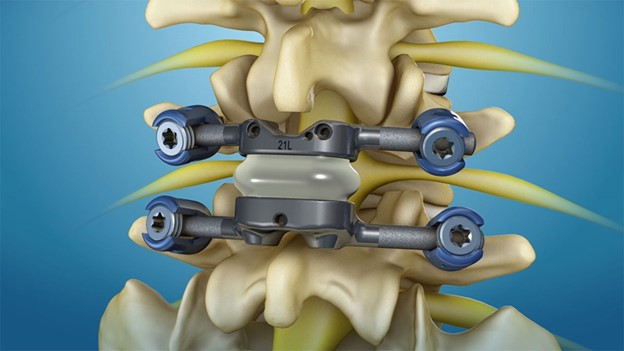
The TOPS System by Premiaspine is the most well-known type of Total Facet Joint Replacement available today, along with various types of second-generation Dynamic Stabilization such as the HPS 2.0 System.
Total facet joint replacement surgery with the TOPS Poster Spine System follows three clear steps:
Step 1: Decompression
Your surgeon makes an incision in the middle of your lower back and removes the bone and thickened ligament pressing on your nerves. This includes the lamina bone and both facet joints at the affected level. As the TOPS implant replaces the structures being removed, your surgeon can clear the nerve pathways more completely than with a standard laminectomy alone.
Step 2: Implant Placement
Instead of fusing your vertebrae with cages, rods, and screws, your surgeon anchors the mechanical joint using four titanium pedicle screws.
Step 3: Motion Preservation
The artificial joint device stabilizes your spine while allowing controlled flexion, extension, rotation, and vertical shock absorption. It resists the forward sliding between vertebrae that causes the slip in degenerative spondylolisthesis. Restoring mobility at the treated level (as opposed to fusion) can help reduce the extra stress fusion places on the spine levels above and below.
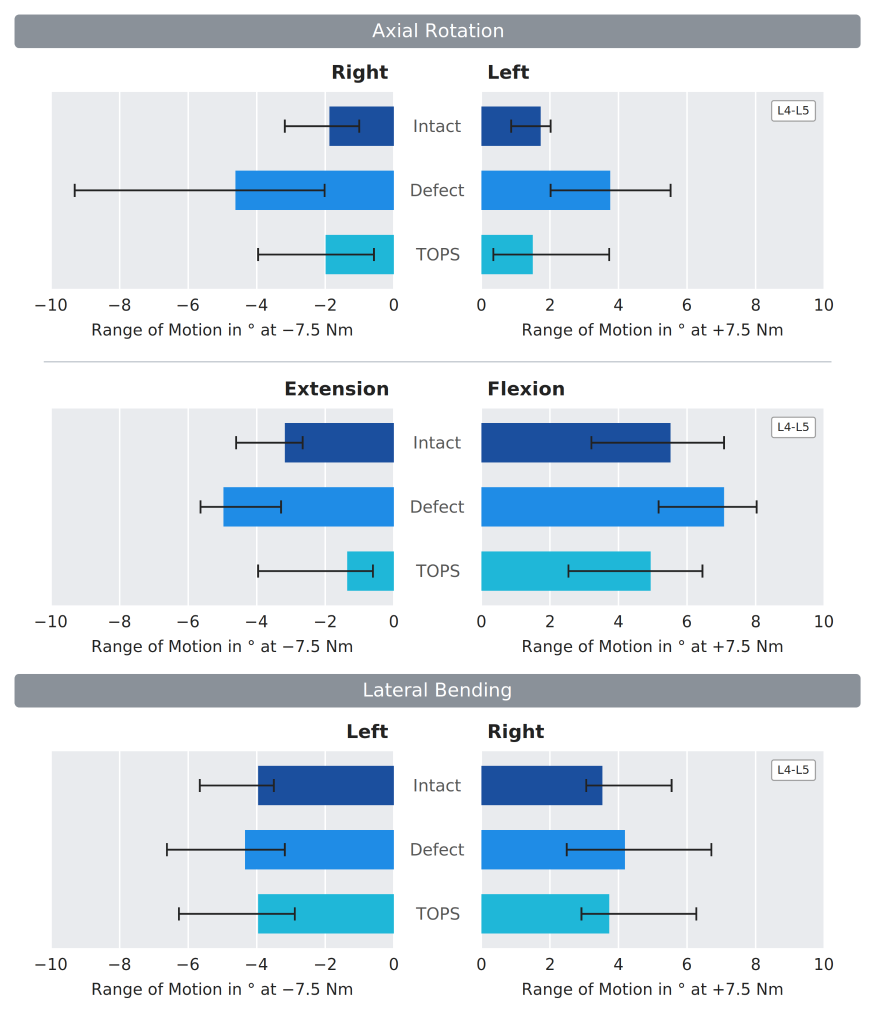
Image Caption: Movement at the operated joint (L4-5) in each direction, measured in degrees. The three bars show the joint intact, after the bone and facet joints have been removed to free the trapped nerves, and after the TOPS implant is fitted. Removing those structures doubles the joint’s twisting movement, and TOPS brings it back close to the intact healthy spine.
Artificial Facet Joint Implant vs Traditional Fusion
For many years, fusion was the main surgical choice for severe joint damage. A fusion surgery joins moving parts of the spine into one solid piece. However, total facet arthropathy treatment offers key advantages over old fusion methods.
In the FDA trial of 321 patients with spinal stenosis and a grade I slipped vertebra (spondylolisthesis), published in Neurosurgical Focus in 2026, 76% of TOPS patients met all four of the trial’s strict success criteria three years after surgery, compared to 57% of patients who had a standard fusion. The TOPS patients needed significantly fewer follow-up operations and injections.
These results support the patient outcomes our German specialists have been seeing for the last 14 years, as the TOPS System was approved for use in Germany in 2012. Many patients travel to Germany for this surgery due to the TOPS case volume and previous experience of our Senior Neurosurgeons, and we have an experienced medical travel program to support international patients on their journey.
Here is how Facet Joint Replacement compares with Fusion Surgery:
Natural Back Mobility
Spinal fusion stops all movement at the treated area. Facet replacement preserves natural flexibility, letting you bend and twist more easily during daily activities.
Protection for Neighboring Joints
Fusion forces surrounding joints to absorb extra mechanical stress. This added force can lead to adjacent segment disease, where nearby discs become damaged earlier and may need additional surgery. Lumber facet replacement absorbs movement forces at the treated level, helping protect surrounding discs and joints from extra wear.
Shorter Recovery Time
Bone fusion requires months of slow healing before bones join completely. Facet joint implants stabilize your spine instantly. Patients begin walking soon after surgery and finish rehab faster.
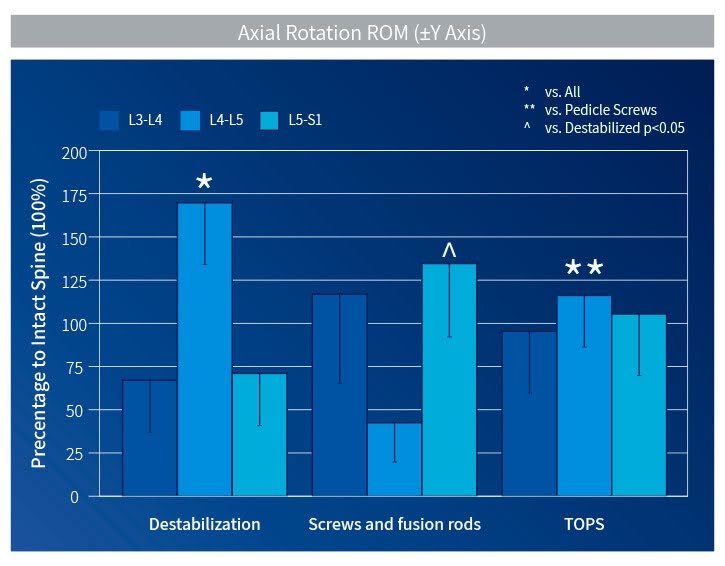
Image caption: This graph shows rotation in the three lowest levels in the Lumbar Spine (L3-4, L4-5 and L5-S1), where 100% is a healthy spine. After TOPS surgery at L4-5 (right), all three joints move close to normal, unlike an supported spine (left), which moves too much, or a fused spine (middle), which moves too little and pushes extra stress onto the joints above and below.
You Don’t Have to Choose Between Pain and a Stiff Spine
Living with severe lower back pain and nerve compression symptoms can affect your quality of life. Traditionally, patients with facet arthropathy and spinal stenosis had to make a hard decision: Live with the pain, or accept a fused, stiff back for life.
Facet joint replacement changes that equation.
Over the last decade, Spine Connection has built international spine programs with ONZ International in Germany, where German specialists review your scans and lay out your surgical options clearly: endoscopic decompression, motion-preserving disc or facet joint implants, or minimally invasive MIS fusion techniques.
Your quote comes as a fixed price package, with all transfers, hospital care and intensive rehabilitation built in. Every week, new international patients are visiting from countries such as the USA and Canada, the United Kingdom, and New Zealand. Expert patient guides look after you from before, during and after your surgery, through to your recovery at home.
You don’t have to wait in public hospital waiting lists. You can take charge of when you have your surgery and choose the technique you want to receive.
Talk to our Spine Connection team about your scans and find out if total facet replacement from leading hospitals in Germany and Thailand is recommended for your case.
Frequently Asked Questions
What is total facet joint replacement?
Total facet joint replacement is a spine surgery that removes damaged, arthritic facet joints and replaces them with an advanced mobile joint. This treats facet arthropathy and spinal stenosis while keeping your spine flexible.
What is the TOPS system spine implant?
The TOPS system is an artificial mechanical device anchored with pedicle screws. This device replaces damaged facet joints and allows controlled spine movement after surgery.
How is facet joint replacement different from spinal fusion?
Facet joint replacement preserves natural motion at the treated segment. Spinal fusion locks the segment together permanently with cages, rods, and screws. Facet joint replacement also lowers stress on nearby spine levels, reducing your risk of adjacent segment disease.
Which countries do patients come from, when traveling to Germany for TOPS Facet Joint Replacement?
We have many patients coming from Australia and New Zealand, the USA and Canada, and ASIA, who can’t access the TOPS or HPS 2.0 Facet Joint Systems at home, due to reasons like implant availability, surgeon experience, or lack of insurance coverage.
Am I a candidate for facet arthropathy treatment?
Patients with chronic lower back pain, stiffness, and leg symptoms from facet arthropathy or spinal stenosis often qualify. Your surgeon confirms if you’re a good candidate for TOPS surgery through a full review of your scans and symptoms.
Scientific References
- Nassr A, Coric D, Pinter ZW, et al. Lumbar Facet Arthroplasty Versus Fusion for Grade-I Degenerative Spondylolisthesis with Stenosis: A Prospective Randomized Controlled Trial. J Bone Joint Surg Am. 2024;106(12):1041-1053. Link
- Coric D, Nassr A, Kim PK, et al. Prospective, randomized controlled multicenter study of posterior lumbar facet arthroplasty for the treatment of spondylolisthesis. J Neurosurg Spine. 2023;38(1):115-125.Link
- Pinter ZW, Freedman BA, Nassr A, et al. A Prospective Study of Lumbar Facet Arthroplasty in the Treatment of Degenerative Spondylolisthesis and Stenosis: Results from the Total Posterior Spine System (TOPS) IDE Study. Clin Spine Surg. 2023;36(2):E59-E69.Link
- Shaffer A, Yu AK, Yu A, et al. One- and 2-year outcomes of lumbar facet arthroplasty versus spinal fusion in young (<65 years) and old (≥65 years) patients for the treatment of degenerative spondylolisthesis and stenosis. N Am Spine Soc J. 2024;19:100329.Link
- Cohen SP, Raja SN. Pathogenesis, diagnosis, and treatment of lumbar zygapophysial (facet) joint pain. Anesthesiology. 2007;106(3):591-614.Link

